


Tim Read in his Brunswick electorate office last week. Photo: Mark Phillips

While dealing with terminal cancer, Brunswick MP Tim Read is determined to keep smiling until the very end
While dealing with terminal cancer, Tim Read is determined to keep smiling until the very end
Mark Phillips
Wednesday, August 5, 2026
Leave a comment
Two days after delivering his farewell speech in the Victorian Parliament, Tim Read arrives at his electorate office opposite Barkly Square on his bike as usual.
Outside, people are enjoying lunch in the mid-winter sun and as he removes his helmet and fluorescent jacket, Read himself is energised by his ride and – apart from visible weight loss – mostly a picture of health.
But looks can be deceiving. Last month Read was told that treatment he had been receiving for metastatic cancer had failed to stem the growth of tumours in his stomach and intestines.
Read has accepted the reality that his condition is terminal, but he refuses to be maudlin or bitter.
As he said in his valedictory speech in the chamber of the Legislative Assembly on July 29, the most important thing to him now is to see smiles on the faces of the people he loves.
Read declares his a “glass half full” kind of person so for now he will continue to carry on as the Member for Brunswick, albeit with a lighter workload.
Caffeine, chocolate and alcohol are out of his diet now and he requires a nap every day, but he wants to be useful to others as long as possible. Being a doctor has helped him come to terms with his illness, he says.
“I’m slower and weaker and I struggle to walk more than a kilometre, and I struggle to walk the stairs – but I’m still walking and talking and while I can do that, I’ll keep going to Parliament.
“There’s no certainty about this, but I just take things week by week and make every day a good day.
“The truth is that I’m going to die and I probably won’t make it to Christmas, but I don’t want to be too maudlin or gloomy and dwell at length on that.”
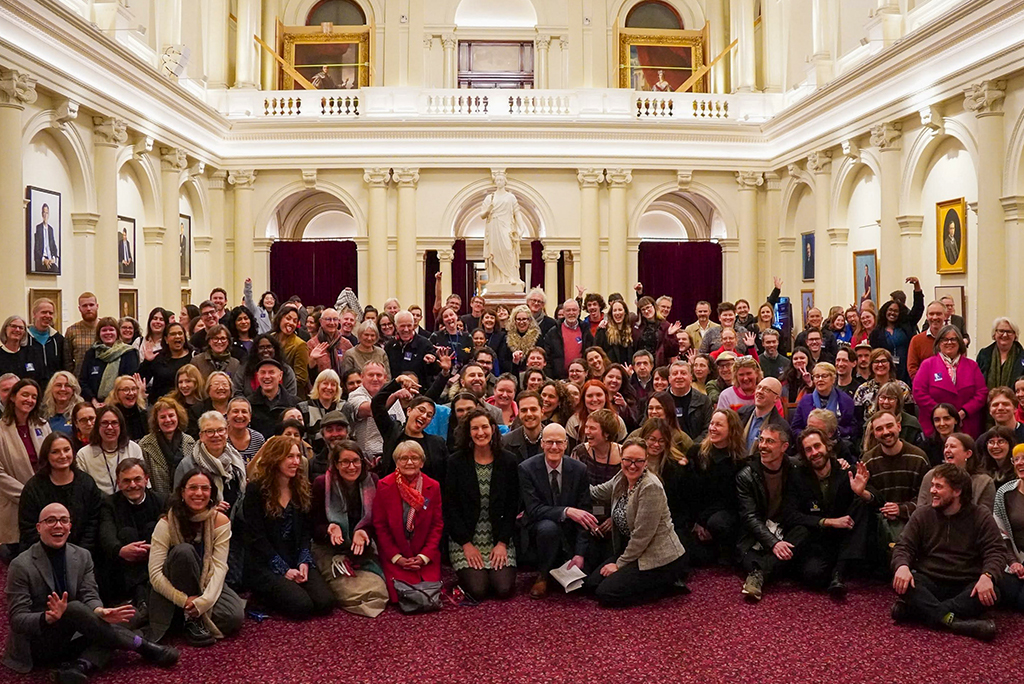
Last Spring, 64-year-old Read had reluctantly decided to seek the endorsement of the voters of Brunswick for a third term in Parliament that would have taken him beyond the usual age of retirement.
Initially, Read had thought it might be time to hand the baton to someone younger but for various reasons but after consulting his partner and two adult children, he opted to go around again for one more term.
Having made the commitment to run again, Read had expected that by now – in August 2026 – he would be well and truly in the thick of election campaigning while also fulfilling his duties as a legislator and a representative of his constituents.
But that was all turned upside down in mid-October when getting ready for work one morning he noticed a slight swelling on his left leg.
Trained as a doctor, Read knew that early diagnosis was crucial to dealing with any illness or disease and having previously had a thumbnail-sized melanoma removed from his ankle in 2019, he wasn’t taking any chances.
The tests confirmed his worst fears: his cancer had returned.
“Once I got to the five-year mark without any recurrence, I thought, well, I’m in the clear,” he says now.
“But it was quietly doing its worst internally for who knows how long.”
Read went public with the news soon afterwards, announcing that he would be reducing his electorate commitments while he began a radical form of immunotherapy treatment.
Initially the treatment seemed to be working but over the summer break he reassessed running for election again.
Read announced his plan to retire from Parliament at the end of January, just days before the first sitting week of the year, fully expecting to continue as an MP until the election in November while receiving ongoing treatment.
But as his condition has deteriorated, even that goal might no longer be possible.
With time running out, Read has dedicated his final year in Parliament to campaigning to save VicHealth, the health promotion foundation that was set up by the Cain Labor government in 1987.
Earlier this year, VicHealth was given a 12-month reprieve from closure by the current government, but its future is far from certain.
For Read, it is personal given that his illness had its origins in a melanoma caused by exposure to the sun when he was younger which could have been prevented if skin cancer awareness campaigns had existed then.
He has argued that closing VicHealth – which costs about $50 million a year to run – creates a false economy because promoting good health saves money in the long run by preventing diseases that are costly to treat. His own cancer treatments cost about $25,000 a dose.
“Victoria needs an independent, funded, health promotion foundation, to lead the fight against the preventable chronic diseases that threaten to overwhelm our excellent but expensive healthcare system,” he said in his valedictory speech.

Read is that rare thing: a politician who is almost universally admired and respected.
He made history when he became the first Green MP for Brunswick in 2018, winning a nailbiting preference count to claim the seat with a margin of just 0.6%.
In 2022, he increased the margin to 13.5%, making Brunswick one of the safest Green-held seats in Australia. And he was on track to easily retain it before his illness.
In his valedictory speech on July 29, Read said he viewed politics as “hope in motion”.
“For me politics is the work you do, to improve people’s circumstances, not just now, but in the future,”he said.
He believes most people enter politics because they genuinely want to make a difference, and away from the theatrics of the political arena he has found most other politicians to be friendly and reasonable to deal with.
Eight years in Parliament has been an education for Read who entered Spring Street with a more jaundiced view of his colleagues than he holds now.
“When I started, I thought they [politicians] were all horrible, and it took me a while, probably longer than it should have, to realise that a lot of politics is role playing.”
As for himself, Read admits he lacked “a bit of mongrel” and has treated his work as a politician in much the same way as he approached his job as a GP: by listening before giving an opinion.
“I actually think that there’s a place for the more combative style in politics within certain limits.
“I think there’s a place for people who are more theatrical, and there’s a place for people who are more thoughtful and considered. I think you need to bring your own style.
“By nature, I have a gentler style of politics. I haven’t done a lot of head kicking in my career and focused more on issues rather than individuals.
“I think I’ve always taken the view that you can persuade people with the right logic and evidence, and I’ve always been keen to listen to what other people have to say and been open to hearing other viewpoints.”

Read admits he may have been slightly naïve when he entered Parliament to think that change could be achieved by policy alone. He now appreciates that the most sensible policy idea is unlikely to be successful without “a clamour of voices” behind you.
One change Read is proud of – even if he and the Greens didn’t get full credit for it – was legislation in his first term of Parliament to remove a requirement that all newly built homes had to be connected to natural gas.
While he will leave Parliament with lingering disappointment that the transition from fossil fuels to renewable energy sources has been slower than he hoped, Read takes some satisfaction from knowing he played a part in pushing Victoria along that path.
Less satisfying is the lack of progress on Sydney Road, which Read has previously described as a traffic “sewer”.
Throughout his time in Parliament — and as a regular commuter cyclist himself — he has pushed for the creation of a separated bike path in the Brunswick section of Sydney Road along with other changes to make it more accessible for pedestrians and public transport users, and to reduce the amount of motor traffic along the road.
“Strategically, we probably could have done a few things differently there, but it’s not like the issue’s going away … I really thought that maybe we could compromise, maybe we could do a few 100 metres of it and see how it looked, you know.
“But for whatever reason, I think the current government has been very pro-motorist, pro-car, and there’ll come a time when we have some more far-sighted policymakers in power.
“I think that it will benefit traders and residents and everyone if we can make the area less dominated by cars and more focused on people.”
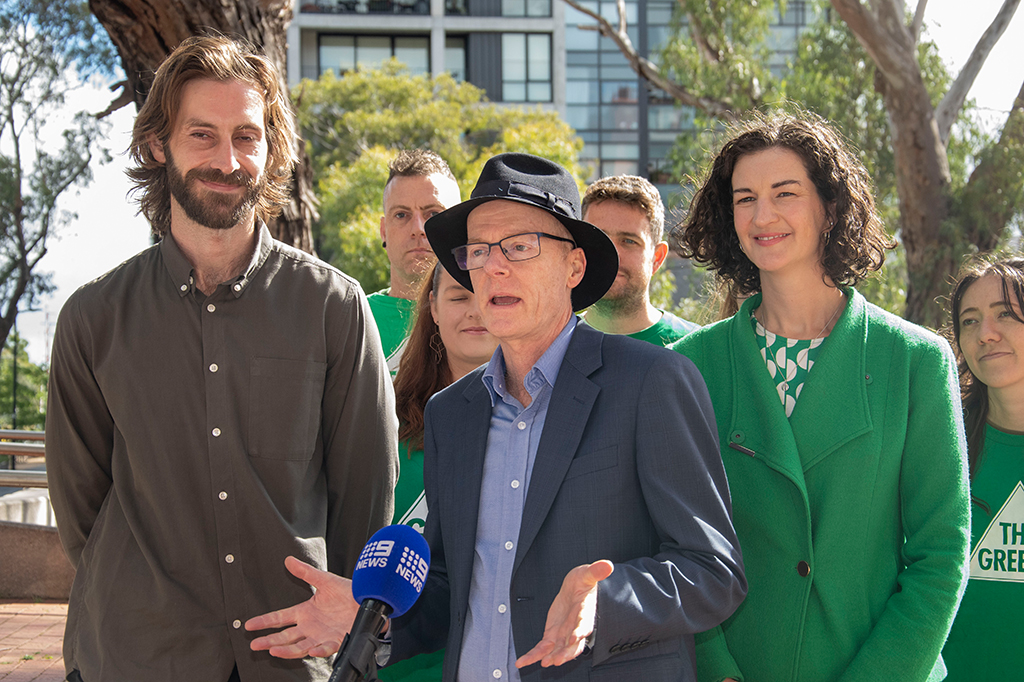
Read is dealing with his approaching mortality with stoicism. Given the unpredictability of his health, if he is well enough, he hopes to spend part of election day canvassing for the Greens’ candidate, Adam Pulford.
Whether Pulford retains the seat or Gabe Steger wins it back for Labor, Read’s main advice for the next MP is not to allow themselves to be pulled in too many different directions at the same time but to stay true to their own 10-year vision for the electorate and the state.
“The Brunswick electorate is highly-educated, and very politically-engaged, and if I’m giving advice to the next member for Brunswick, it’s don’t underestimate the political wisdom of your constituents,” he adds.
“The person who answers their door in their Ugg boots and trackie dacks could very well be a senior public servant or an academic with expertise in the very thing that you’re trying to spruik to them.”
What will he miss most?
“Just the wonderful political conversations I’ve had across the community, the intellectual stimulation of people challenging me over all sorts of things.”
Health willing, Read will be a fascinated observer of the state election in November. He says the outcome is unpredictable and although right wing populism and One Nation are on the rise and sure to have an impact, he hopes it will be just a blip in history.
While serving as chair of the Joint Parliamentary Integrity and Oversight Committee, Read has observed how the declining trust in traditional political parties and institutions that has fed the rise of One Nation is intrinsically linked to issues of integrity.
“I think Victorians are fundamentally decent,” Read says.
“And I think a lot of what’s happening politically is due to frustration about a mixture of things, including economic circumstances and the anti-politician stuff we referred to.
“What does concern me though is the scapegoating of immigrant communities, because that’s kind of cheap, easy politics and that can be difficult to unwind – and we’ve seen the consequences of that in the US.
“But I’m hopeful that Victorians are too decent to let that become a reality … There’s a lot to be concerned about and a lot to be optimistic about, but I think I’m just hardwired to be an optimist.”
Support independent local journalism
We are an independent hyperlocal news organisation owned and run by the people in your community. With your support, we can continue to produce unique and valuable local journalism for Brunswick and the inner north of Melbourne.
Latest stories:


Leave a comment
At Brunswick Voice, we welcome the comments and contributions of our readers on the issues discussed in our articles. Please keep your commentary on-topic. All comments are subject to the guidelines outlined below.
Please ensure your comments comply with these guidelines:
• Respect others
• Criticise ideas, not people
• No offensive or defamatory language
Read more comment guidelines >
Read more comment guidelines >
Commenters are encouraged to use their real name or a variation of their real name (e.g. first name and initial). Offensive or clearly fake screen names will not be accepted, as will those that intentionally impersonate or misrepresent others.
Comments on this article are premoderated to ensure discussion remains on. Please be aware there may be a delay in comments appearing on the site until they are approved by the moderator.
We reserve the right to refuse approval to any comments and no further discussion will be entered into if a comment is refused approval or deleted.
Our collection and use of your details are governed by our Privacy Policy and our Terms & Conditions.
I was fortunate enough to watch your valedictory speech Tim. It made me smile. Thank you so much for all your great work. You are an inspiration.
I’d like to thank Tim for his consistent support for all sorts of progressive causes. In particular, as a member of the Refugee Action Collective, I appreciate his willingness to support and speak at rallies for refugees and asylum-seekers.
Tim is a decent man and I hope he and his family have more moments to treasure.
So grateful for Tim’s advocacy for the local community – he’s such a decent, kind light in parliament. Will miss seeing him cycling down Canning St on the way to the city for sitting days!